Skip to content

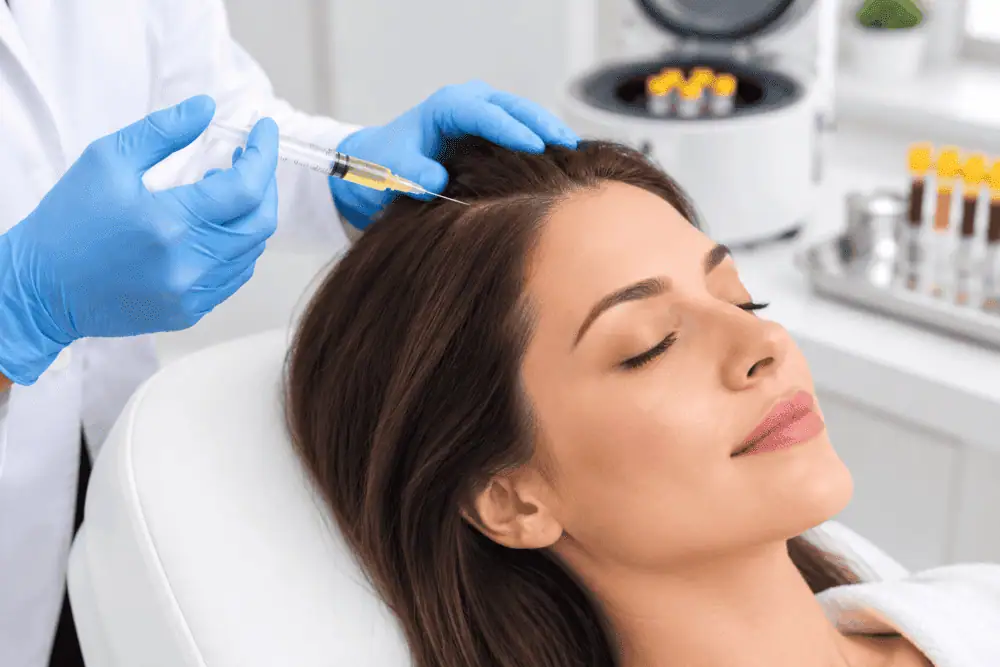
Table of Contents
Thinning hair rarely announces itself. Most people notice it in stages: more strands in the shower drain, a part line that reads wider than it did last year, a photo that catches the light in a way that says something has changed.
At SeaMist MedSpa, PRP hair restoration is one of the treatments patients ask about most often, and the honest answer is more specific than a simple yes. It may help thinning hair in certain cases, and how much depends on what is driving the thinning and how far along it is.
Does platelet-rich plasma actually work on hair that keeps getting thinner?
Platelet-rich plasma uses growth factors concentrated from a patient’s own blood to support follicles that have weakened but are still active, which is why it is studied most in early to moderate pattern thinning. Research suggests many patients see reduced shedding and improved density, though PRP is used off-label for hair and results vary from person to person.
What PRP Hair Restoration Actually Is
PRP hair restoration begins with a small blood draw, the same kind used for routine lab work. That sample is placed in a centrifuge, which separates the blood into layers and concentrates the platelets into a small volume of plasma. Platelets carry growth factors, the signaling proteins your body uses during tissue repair. In platelet-rich plasma therapy for the scalp, that concentrate is injected into the areas where hair has thinned, usually along the part line, the crown, or a receding front. The detail that surprises most people: nothing synthetic is added. The material being injected came out of the patient’s own arm twenty minutes earlier.
How Platelet-Rich Plasma Works On A Thinning Follicle
Thinning is usually a problem of follicle miniaturization, not follicle loss. The follicle is still there, but it has shrunk, and it produces a finer hair with each growth cycle until the hair stops being visible. That is why PRP is being studied for hair loss in the first place. Growth factors are thought to support blood supply around the follicle and encourage a longer active growth phase. In practical terms, PRP signals follicles. It is not a replacement for follicles that are gone, and no injection can rebuild what is no longer there.
What The Research Suggests, And Why PRP Is Off-Label For Hair
PRP is FDA-cleared for certain wound care applications and is used off-label for hair restoration. Off-label does not mean unregulated or unusual. It means this specific application has not gone through that particular approval pathway, which is common across medicine. The evidence base for PRP for hair loss is promising but still developing. Studies on androgenetic alopecia have mostly been small, and preparation methods, platelet concentration, and injection protocols differ between them. Across that research, many patients show measurable improvement in hair density and reduced shedding. However, results are not uniform, and a good provider will say so before a first appointment, not after.
Which Kinds Of Thinning Hair PRP Can And Cannot Help
PRP tends to perform best in early to moderate androgenetic alopecia, the pattern thinning that runs in families. Widening part lines, diffuse thinning at the crown, and reduced density along the temples are the presentations most likely to respond, because follicles in those areas are weakened rather than absent.
PRP is less likely to help in a few situations:
- Fully bald areas, where follicles are no longer present
- Thinning driven by an untreated cause such as thyroid dysfunction, iron deficiency, or certain medications
- Scarring alopecias, which behave differently from pattern hair loss
Hair loss has more than one cause, and identifying yours comes before choosing any hair restoration treatment.
What A Course Of PRP Sessions Involves
PRP works as a series rather than a single visit. One appointment includes the blood draw, processing, and scalp injections, and typically runs about 45 to 60 minutes from start to finish. Most patients complete three to four sessions spaced four to six weeks apart. Downtime is minimal, with mild tenderness or redness at the injection sites that usually settles within a day. Maintenance sessions may be recommended periodically to support results over time.
What Improvement Realistically Looks Like
Reduced hair shedding is often the first change patients notice, sometimes within the first couple of months. It is a quieter result than people expect, and it is a meaningful one, because slowing loss protects the hair that is still growing.
Changes in thickness and texture build gradually after that, with visible hair regrowth reported by many patients around the three- to six-month mark. Outcomes vary based on the cause and stage of thinning, overall health, and consistency with the full treatment plan.
How To Tell If PRP Is Worth Exploring
The strongest signal is thinning that is recent or actively progressing, with hair still present in the affected area. Someone who has watched their part widen over the past year is a more likely candidate than someone whose crown has been bare for a decade.
It is worth pairing that conversation with a look at what is causing the loss. A scalp assessment, a review of medical history, and in some cases lab work give a clearer picture than a mirror does. SeaMist MedSpa offers PRP hair restoration in Newport, RI, and Wakefield, RI, and anyone comparing hair loss treatment Rhode Island providers should expect a candidacy discussion first, not a sales pitch.
Common Questions About PRP For Thinning Hair
Does PRP hurt?
Discomfort is typically mild. Most patients describe brief pressure or a pinching sensation during the scalp injections.
Is PRP safe?
Because the treatment uses the patient’s own blood, the risk of allergic reaction or rejection is very low. A provider reviews medical history and current medications beforehand.
Can PRP regrow hair in bald spots?
Generally no. PRP supports follicles that are weakened but still active, so fully bald areas are unlikely to respond.
Do men and women both get PRP?
Yes. The pattern of thinning differs between them, and treatment plans are adjusted accordingly.
Thinning Hair Deserves A Real Answer, Not A Guess
The most useful next step is a conversation with someone who can look at your scalp and tell you what is actually happening. Our providers assess density, pattern, and history before recommending anything, and if PRP isn’t the right fit, our team will say so too. Concerned about thinning hair? Schedule a consultation to explore personalized hair restoration options.